Tyre load index chart (60 to 160)
Full tyre load index chart in kilograms, from 60 to 160, with how to read single and dual load numbers on van, light truck and truck tyres.
The load index is the number after the tyre size, such as the 91 in 205/55R16 91V. It's a code for the maximum load one tyre can carry at its correct inflation pressure. Look the number up below to get the load in kilograms.
| Load index | Max load | Load index | Max load | Load index | Max load |
|---|---|---|---|---|---|
| 60 | 250 kg | 94 | 670 kg | 128 | 1,800 kg |
| 61 | 257 kg | 95 | 690 kg | 129 | 1,850 kg |
| 62 | 265 kg | 96 | 710 kg | 130 | 1,900 kg |
| 63 | 272 kg | 97 | 730 kg | 131 | 1,950 kg |
| 64 | 280 kg | 98 | 750 kg | 132 | 2,000 kg |
| 65 | 290 kg | 99 | 775 kg | 133 | 2,060 kg |
| 66 | 300 kg | 100 | 800 kg | 134 | 2,120 kg |
| 67 | 307 kg | 101 | 825 kg | 135 | 2,180 kg |
| 68 | 315 kg | 102 | 850 kg | 136 | 2,240 kg |
| 69 | 325 kg | 103 | 875 kg | 137 | 2,300 kg |
| 70 | 335 kg | 104 | 900 kg | 138 | 2,360 kg |
| 71 | 345 kg | 105 | 925 kg | 139 | 2,430 kg |
| 72 | 355 kg | 106 | 950 kg | 140 | 2,500 kg |
| 73 | 365 kg | 107 | 975 kg | 141 | 2,575 kg |
| 74 | 375 kg | 108 | 1,000 kg | 142 | 2,650 kg |
| 75 | 387 kg | 109 | 1,030 kg | 143 | 2,725 kg |
| 76 | 400 kg | 110 | 1,060 kg | 144 | 2,800 kg |
| 77 | 412 kg | 111 | 1,090 kg | 145 | 2,900 kg |
| 78 | 425 kg | 112 | 1,120 kg | 146 | 3,000 kg |
| 79 | 437 kg | 113 | 1,150 kg | 147 | 3,075 kg |
| 80 | 450 kg | 114 | 1,180 kg | 148 | 3,150 kg |
| 81 | 462 kg | 115 | 1,215 kg | 149 | 3,250 kg |
| 82 | 475 kg | 116 | 1,250 kg | 150 | 3,350 kg |
| 83 | 487 kg | 117 | 1,285 kg | 151 | 3,450 kg |
| 84 | 500 kg | 118 | 1,320 kg | 152 | 3,550 kg |
| 85 | 515 kg | 119 | 1,360 kg | 153 | 3,650 kg |
| 86 | 530 kg | 120 | 1,400 kg | 154 | 3,750 kg |
| 87 | 545 kg | 121 | 1,450 kg | 155 | 3,875 kg |
| 88 | 560 kg | 122 | 1,500 kg | 156 | 4,000 kg |
| 89 | 580 kg | 123 | 1,550 kg | 157 | 4,125 kg |
| 90 | 600 kg | 124 | 1,600 kg | 158 | 4,250 kg |
| 91 | 615 kg | 125 | 1,650 kg | 159 | 4,375 kg |
| 92 | 630 kg | 126 | 1,700 kg | 160 | 4,500 kg |
| 93 | 650 kg | 127 | 1,750 kg |
Single and dual load numbers
Van, light truck and truck tyres show two load indexes separated by a slash, like 106/104 or 148/145.
- The first number is the load for a single tyre at an axle end.
- The second is the load per tyre when two are fitted side by side as duals.
The dual figure is lower because a dual pair shares the load unevenly on road camber and through corners. On a truck, an 11R22.5 148/145 tyre carries 3,150 kg as a single and 2,900 kg per tyre in a dual set.
Working out an axle's capacity
Multiply the load per tyre by the number of tyres on the axle.
- A steer axle with two 295/80R22.5 tyres rated 152 (3,550 kg each) can carry up to 7,100 kg on tyres.
- A drive axle with four 11R22.5 tyres rated 145 in duals (2,900 kg each) can carry up to 11,600 kg on tyres.
The axle, suspension and registration limits still apply. Tyres are only one part of the rating.
Load index and inflation pressure
A tyre only carries its rated load at the pressure set by the tyre and vehicle maker. Under-inflated tyres flex more, build heat and lose capacity. XL and higher ply-rated tyres need higher pressures to reach their rated load.
Choosing a replacement
A replacement tyre should meet or exceed the load index on the vehicle's tyre placard. For vans and light trucks, check both the single and the dual number.
Load indexes across the LEAO range
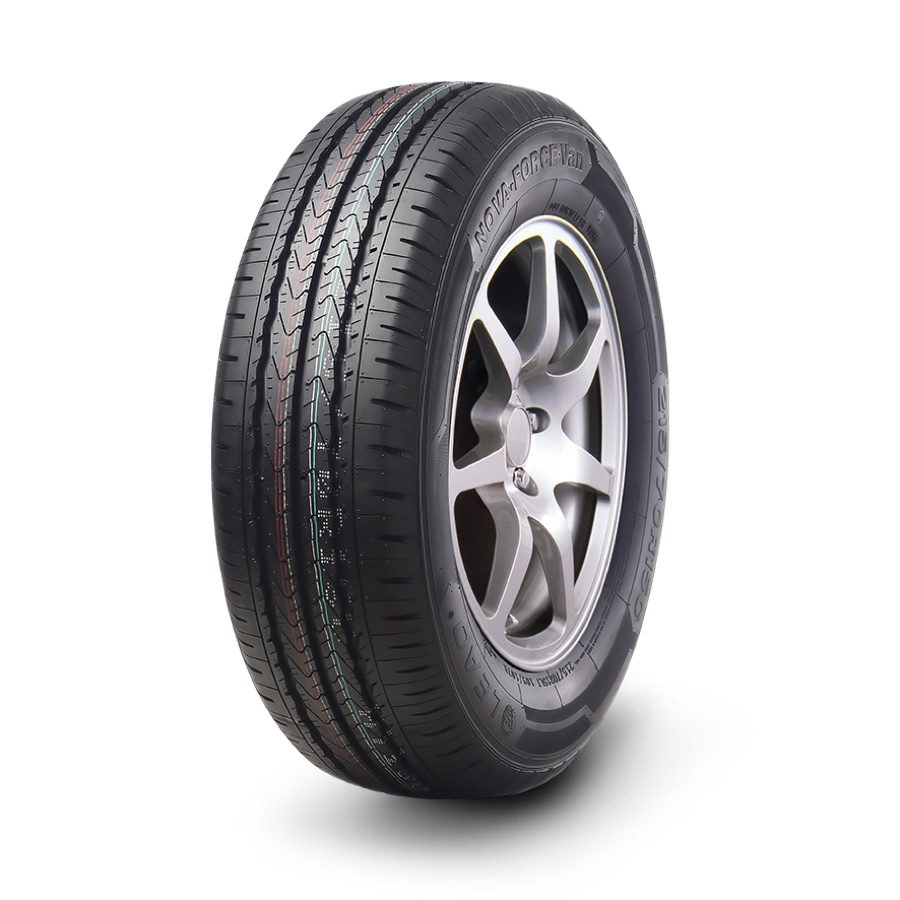
Every LEAO size table lists the load index with each size, from the 69 of a 145/70R12 NOVA-FORCE GP to the 152/149 of a 295/80R22.5 D905. For the rest of the sidewall, see how to read a tyre size and the tyre speed rating chart.